
Are Tennessee Arrest Records Public?
Often, yes. Tennessee's Public Records Act covers records held by state and local government. Photographs and electronic data count as records too. Access is the default unless an exception applies. Even so, the law does not promise a booking-photo page in every county. A sheriff can keep the image in the booking file and post only a text roster. Some counties run no online feed at all.
The core statute is T.C.A. § 10-7-503, best read alongside the Comptroller's Public Records Act FAQ. Ask the office that actually holds the record. Name the document you want precisely. A request can still be denied or redacted under another statute, a court order, or lawful agency policy.
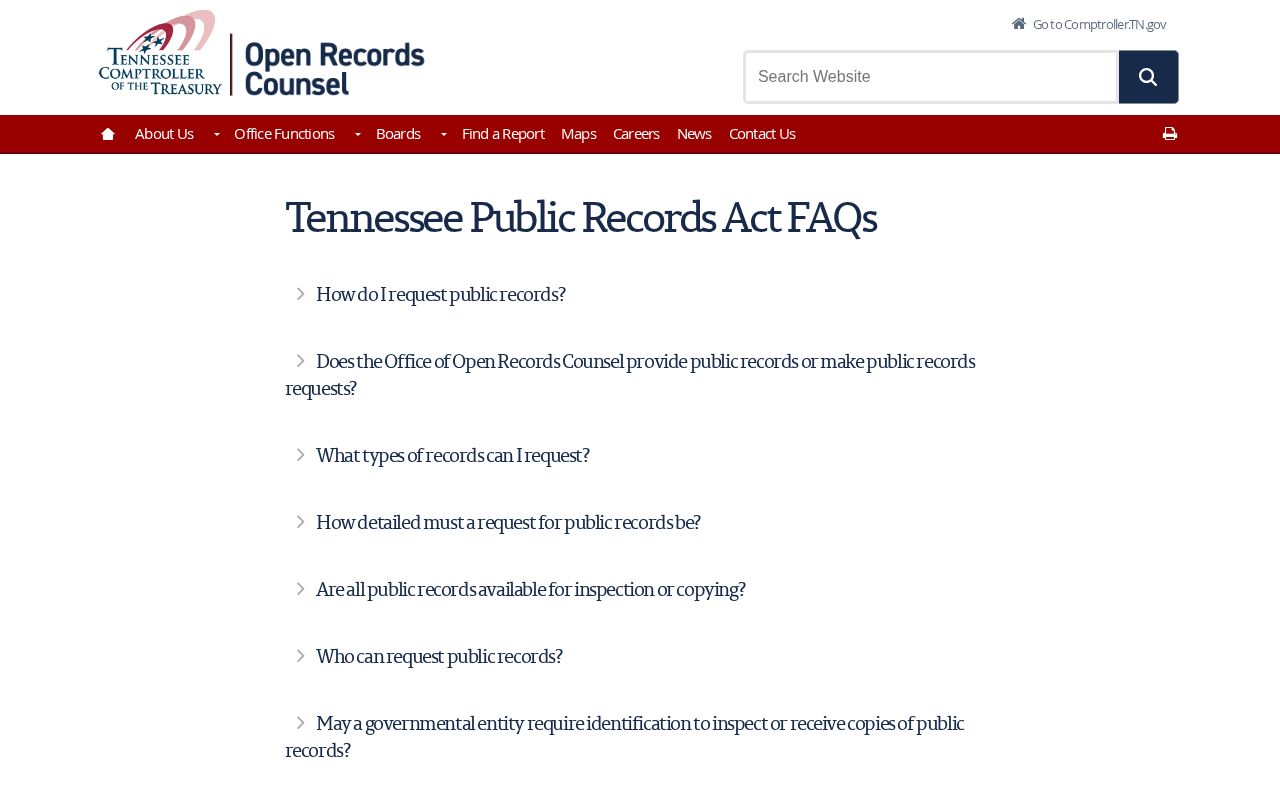
The Comptroller FAQ explains requester duties and limits. Each county jail, sheriff, or state agency still answers for the arrest and booking records it holds.
What Tennessee Booking Law Requires
T.C.A. § 8-4-115 sets a standardized booking procedure developed with the Comptroller, TBI, and law-enforcement associations. Every booking gets a photograph and fingerprints. It also gets a state control number. Booking data then moves to the court clerk, which is how the record is routed. The statute says nothing about online publishing, though. No public search tool is required. Counties need not keep an image posted for any fixed period.
That gap shapes mugshot access across Tennessee. A photo in the file is one thing. A photo on today's roster is another. A county may show text first. It may post a photo only when one exists. Some keep a short rolling view. Others hand out copies through their records process, and a portal can sit behind a verification screen too.
Tennessee has no enacted statewide anti-pay-to-remove statute. HB 1219 in the 112th General Assembly proposed removal rules after certain favorable outcomes, but that bill never became current law. Access today rests on the TPRA, its exceptions, court orders, and each custodian's own system. For a wider view, see the Tennessee booking-photo landscape on county photos and custody records.
How Tennessee Public Records Requests Work
The Comptroller requires every public agency to post a records policy, name a public-records request coordinator, describe the request process, and list applicable fees. Custodians still have limits. They need not create a new record. They cannot merge unrelated systems into a statewide report. General research questions are off the menu. Ask for an existing report. Give enough detail to find it.
Inspection and copies follow different rules. You may inspect in person, by phone, fax, mail, email, or online, but a copy request can require a written form and proof of Tennessee citizenship. Inspection is generally free. Copies carry the permitted or reasonable rate, labor charges can apply past an allowed threshold, and fees vary by agency, so ask for an estimate first.
- Identify the county or state agency that created or keeps the record.
- Name the item: booking sheet, arrest report, booking photograph, or a specific date and incident record.
- Find the custodian’s posted request policy and use its copy form if required.
- Provide a case, control, or incident number when available, while keeping the date and agency precise.
- Ask for the fee estimate and response status. If the custodian withholds material, ask which legal exception applies.
A Tennessee records request does not guarantee a photo. A custodian may redact protected details, cite a statute, or report that no responsive record exists. Arrests that cross city and county lines complicate things. Ask which agency holds the booking sheet and which holds the incident report.
Note: A request to inspect a record and a request for a certified copy are different, so state which one is needed before filing.
Tennessee Juvenile Photo Limits
Juvenile booking material is not an ordinary roster record. T.C.A. § 37-1-155 keeps juvenile fingerprints and photographs largely within law enforcement. It sets conditions for photographing or fingerprinting a child during a delinquency investigation. Qualifying records get separate handling.
The statute also orders destruction or court-directed expunction in specified outcomes. Photos, video, or audio made during an officer's duties are not automatically public records. Absent such an order, release stays restricted. Juvenile files must also stay apart from adult booking records.
A missing name on a roster can mean several things. The record may be protected. The entry may be delayed, or the youth may have been transferred. It may just be a search miss. Guessing from a blank result gets you nowhere. The custodian can explain the process without revealing confidential details.
How Expungement Changes Tennessee Records
Expungement is never automatic in Tennessee. The law calls it expunction in some places. The controlling statute is T.C.A. § 40-32-101. A petition usually begins in the county court where the arrest happened. From there, everything rides on how the case ended. TBI recognizes dismissal, nolle prosequi, no true bill, not guilty, diversion, reversal, and certain conviction routes, and each carries its own conditions.
The details sit in TBI's expungement guidance. Charges dropped by dismissal, nolle prosequi, no true bill, or acquittal can typically be expunged with no defendant fee, as the statute allows. Diversion orders follow different rules. So do eligible convictions, which come with clerk fees and narrow, offense-specific conditions. Skip the guesswork and rely on the current court packet, the clerk, or counsel.
So what does an order actually do? It names the charge and every agency touched. TBI sends it to the arresting agency, the county jail, TDOC, and TBI itself. The charge then comes off TBI's state criminal record, while TDOC clears it from FOIL and TOMIS. Official systems update this way. Private copies and search caches may lag behind anyway.
TBI's expungement page is where forms and eligibility rules live. When you ask any agency or publisher to fix a record, bring the court order as your source document.
Sealed and Expunged Records Differ
TBI does not "seal" records in its expungement process. Its guidance describes deleting qualifying charges after an order. Other courts and agencies may use "sealed," "restricted," or "confidential" under a different authority. The wording matters. Follow the scope of the actual court order. A sealed file can stay out of public view without matching an expunged record.
A dismissed case can remain visible in a public system. That lasts until the eligible person finishes the court process. Booking photos linger too. A photo copied before an order can persist outside government databases. Keep a certified copy of the order and track which agencies received it. The official order governs the government record, not a private publisher's promise.
| Record status | Practical meaning | Next source to check |
|---|---|---|
| Public and unsealed | May be inspected or copied unless another exception applies | Records custodian and court clerk |
| Sealed or restricted | Public access is limited under an order or other authority | Issuing court or agency |
| Expunged | A qualifying court order directs removal or destruction within its scope | Clerk, arresting agency, jail, TBI, and TDOC as named |
| Private copy remains | An independent publisher may not have received the court update | Publisher’s free correction route |
Tennessee Arrest Copies and Free Corrections
Start with official records after an expungement or a factual correction. Keep the court order. Ask the arresting agency or jail to fix a wrong fact. Then contact each private publisher that copied the record. A publisher's policy can offer a free review. It does not create a legal right to delete every accurate historical report. Ask under its stated terms and retain the response.
RecentlyBooked offers free review for certain listings. Those include ones that are dismissed, expunged or sealed, incorrect or outdated, tied to the wrong person, juvenile, or duplicate. Its policy asks for the exact listing and supporting information. Busted Newspaper's listing request page describes a no-mandatory-fee path for specified outcomes. Mugshots.com posts a publisher policy and contact route. Arrests.org exposes a privacy and contact page. It does not promise general free removal. Mugshots.zone's privacy page likewise creates no Tennessee-specific deletion right.
Use the publisher's own contact route, not a paid intermediary. A payment demand does not prove the government record was unlawful. Paying never changes the official docket. A publisher may review, correct, decline, or take time to process a request.
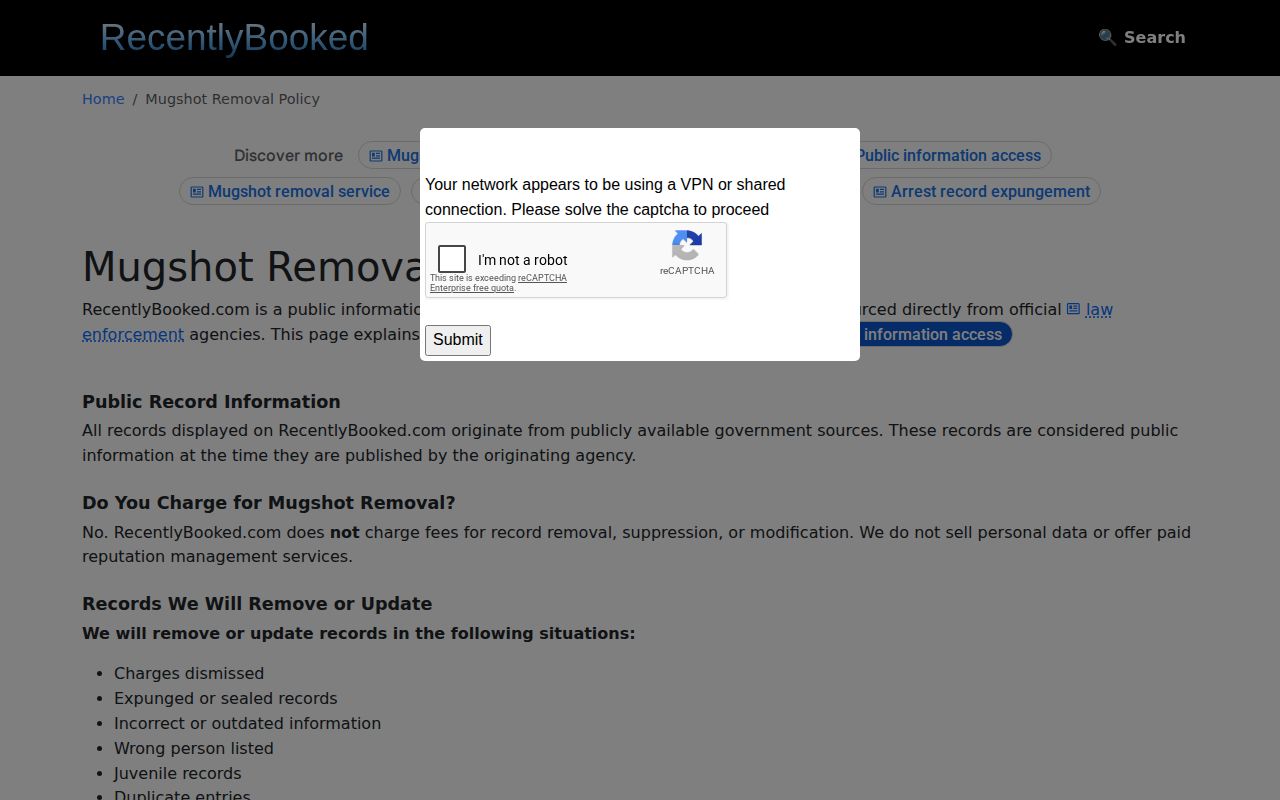
The policy lists the publisher's own conditions and asks for facts about a specific listing. It is not a Tennessee statute.
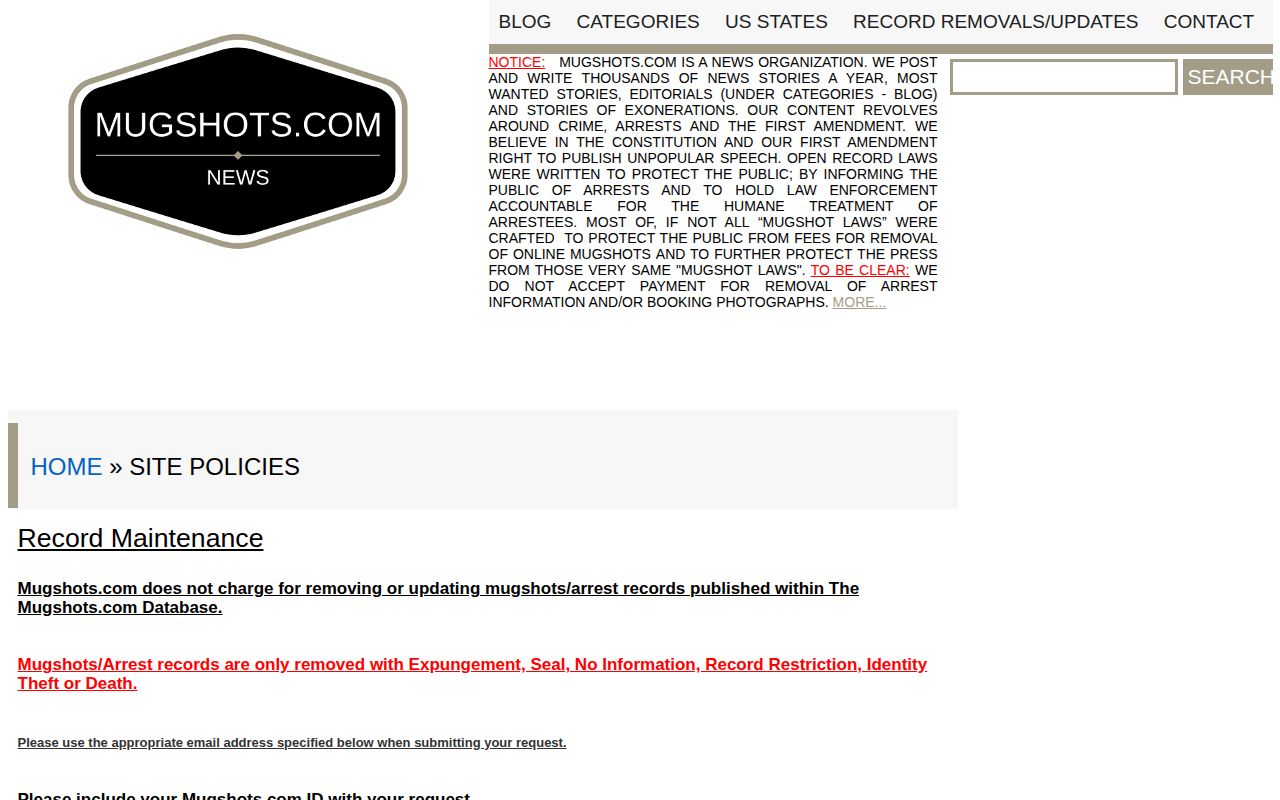
The policy page is just a private contact route. The court and the government custodian remain the sources for the case result.
A privacy contact channel is not a promise of free removal. State only what the publisher's current policy actually says.
How Tennessee Courts Treat Booking Photos
Federal courts have treated booking photos as public-record material on the facts before them. A 2018 Eastern District of Tennessee order is one example. It involved a Hamilton County Sheriff booking photo. The order applied § 10-7-503 and rejected a general constitutional right to nondisclosure on that record. A Middle District ruling in Hall v. Metropolitan Government of Nashville and Davidson County took a similar approach. It treated booking photos as public records under the claims presented.
Still, these rulings are fact-specific. They do not erase juvenile rules, court orders, or redaction duties. They also leave intact liability for a false statement. The Tennessee Supreme Court's State v. Martin opinion considered Shelby County's "Who's In Jail?" material in a photo-lineup context. Its state-action analysis is no blanket ruling. A government file and a county website are different things. So are a private republication and an evidentiary use.
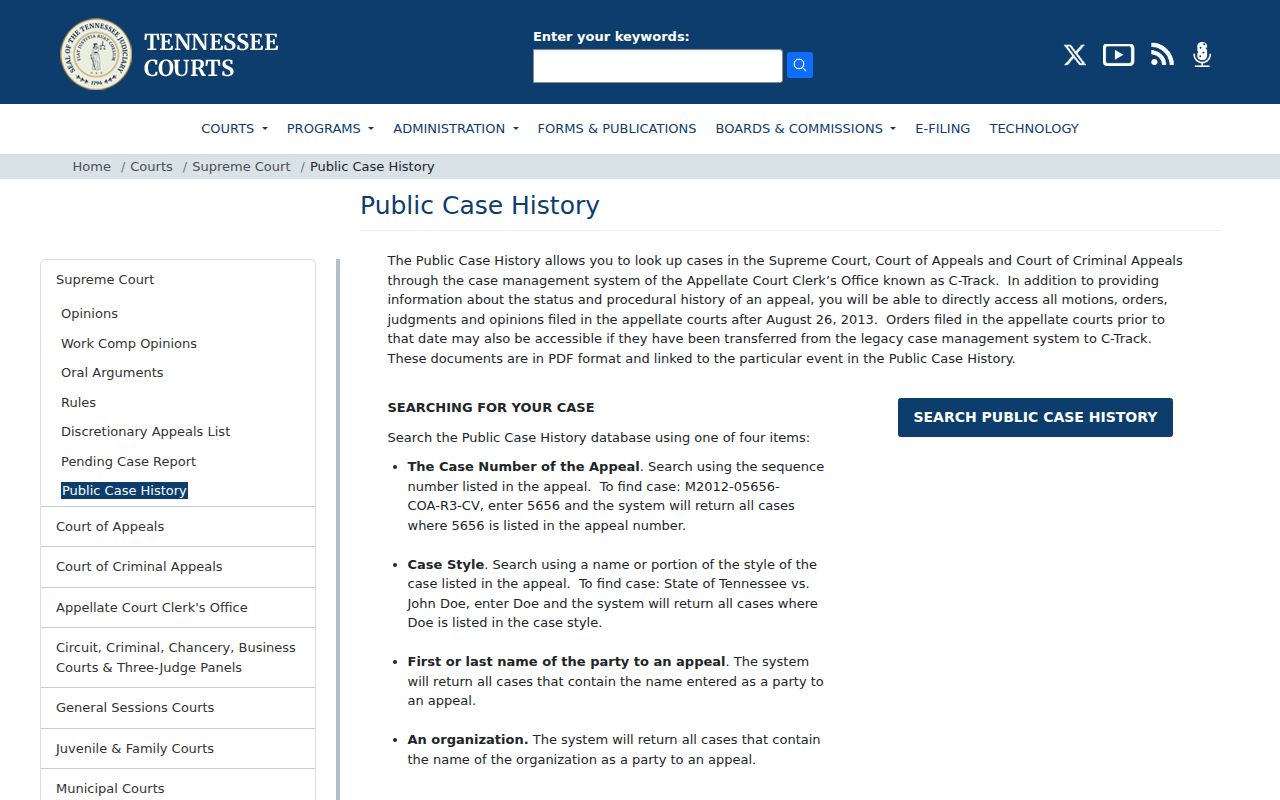
The appellate history service covers only a defined court scope. Trial-level outcomes need the county clerk. Confirm arrest dispositions with the clerk that holds the case.
A 2024 WSMV investigation documented public concern about removal demands tied to private mugshot publication. The story is journalism, not a statute. So verify the case result. Use the official and publisher correction routes described above.
Note: A decision about access in one lawsuit does not cancel another statute, sealing order, juvenile restriction, or duty to correct a false fact.
Tennessee Retention and Older Records
Retention in Tennessee works differently than in many states. There is no single statewide clock for county booking photographs. Instead, the Comptroller relies on local retention schedules built through MTAS or CTAS. The Secretary of State's records-management program also applies. Whatever agency holds the file follows its own approved schedule. That schedule controls how long the record survives, subject to other law.
A live roster is not an archive. An old newspaper blotter is not the official booking file either. A web entry can vanish. The underlying report may still be requestable. An image can be restricted even when another case record is kept. Ask the custodian which schedule applies. Ask whether the record is still available. For historical state corrections files, TDOC's archived-record request runs separately from any county jail request.
Each type of Tennessee arrest record has its own door. A current photo or booking sheet belongs to the county directory's arrest jurisdiction. A court result belongs to the clerk. A state-felony sentence record belongs to the TDOC FOIL search. Keeping these routes straight ties the public-access question to the right custodian every time.